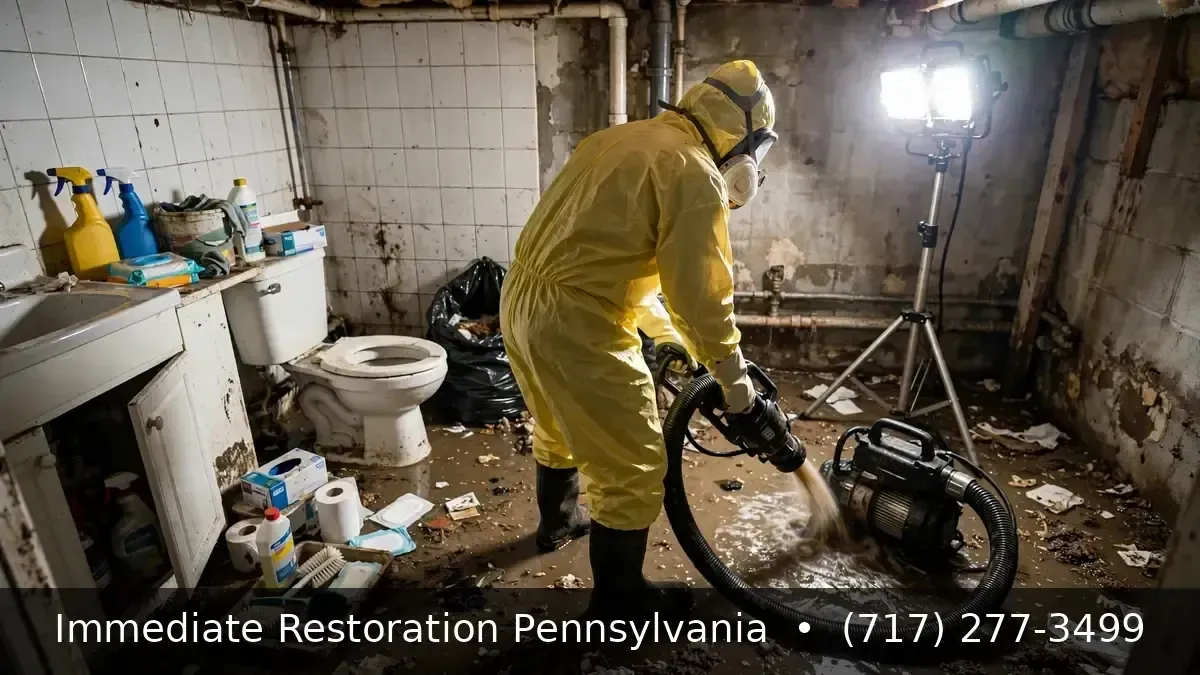
Containment & Safety
Full PPE, containment barriers, and negative air protect your family and the rest of your home during cleanup.
Quick answer: Yes — sewage is Category 3 black water carrying bacteria and viruses. Don't touch it. We extract, disinfect, remove contaminated materials, and restore the area safely.
| Health risk | Bacteria, viruses — Category 3 black water |
|---|---|
| DIY advice | Don't — call professionals |
| Includes | Extraction, disinfection, safe disposal |
Certified black-water cleanup: containment, extraction, sanitizing, and safe restoration.
Full PPE, containment barriers, and negative air protect your family and the rest of your home during cleanup.
Specialized extraction removes sewage and contaminated water, including from basements, crawl spaces, and floor drains.
EPA-registered disinfectants and antimicrobial treatments sanitize all affected surfaces per IICRC S500 standards.
Porous materials that contacted sewage — carpet, pad, drywall, insulation — are safely removed and disposed of.
Sewage — classified as Category 3 “black water” — is the most hazardous water damage a property can suffer. It carries E. coli, hepatitis, norovirus, and parasites, and it soaks into porous materials that can never be truly sanitized. Our sewage backup cleanup follows IICRC S500 protocols: full containment, professional-grade extraction, removal of contaminated porous materials, and hospital-grade disinfection of everything that remains.
This is especially urgent in Pennsylvania. Philadelphia's combined sewer system — stormwater and sewage sharing the same pipes — surcharges during cloudbursts and pushes black water up through basement floor drains and toilets. Pittsburgh's aging clay and cast-iron laterals crack and back up. And anywhere in the state, a failed backwater valve or overwhelmed municipal main can flood a finished basement with sewage in minutes.
After extraction and sanitizing, we dry the structure with monitored dehumidification, treat for mold prevention (sewage-soaked areas are prime mold territory), and rebuild damaged finishes. Every step is documented for your insurer — sewage claims need airtight paperwork, and we provide it.
Philadelphia leads the state in sewage backups, and it's structural: one of the nation's oldest combined sewer systems, serving dense rowhouses whose basement floor drains connect directly to those surcharging mains. A summer cloudburst can send sewage into hundreds of basements in a single storm cell.
Elsewhere, aging infrastructure is the story — cracked clay laterals in Pittsburgh's hillside neighborhoods, root-intruded lines in the suburbs, and overwhelmed small-town treatment plants during wet springs. Many PA homes also lack backwater valves, the simple device that prevents municipal backups from entering the house.
Health-first protocol: contain, extract, sanitize, restore.
Emergency Containment
Crews arrive in full PPE, establish containment, and shut down HVAC to prevent contaminant spread.
Extract & Remove
Sewage is extracted and contaminated porous materials — carpet, pad, drywall — are safely removed and disposed.
Sanitize & Dry
EPA-registered disinfectants sanitize all surfaces; monitored drying brings the structure to verified dry goals.
Rebuild & Prevent
We rebuild damaged finishes and advise on backwater valves and maintenance to prevent recurrence.
Licensed, insured, and on call 24/7 — the crew Pennsylvania trusts when water won't wait.
24/7 Live Answer
A real person picks up day or night — nights, weekends, and holidays included.
Licensed & Insured
Fully licensed and insured for residential and commercial work statewide.
Workmanship Warranty
Every job backed by a written workmanship warranty and photo documentation.
Straight answers to the questions Pennsylvania homeowners and property managers ask us most.
Cities we serve: Philadelphia, PA · Pittsburgh, PA · Allentown, PA · Erie, PA · Reading, PA · Scranton, PA · Lancaster, PA · Harrisburg, PA · Altoona, PA · York, PA — 24/7 Emergency Crew · State College, PA · Wilkes-Barre, PA — plus all 251 Pennsylvania service areas.
Related guides: Sewage Backup Cleanup: What to Do Right Now · Sewer Backups in Philly Basements: What to Know
Official resources: EPA — Mold Guidance · Ready.gov — Floods · PA Emergency Management Agency (PEMA)
Water problems rarely travel alone — these services often go hand in hand.
Standing contaminated water extracted fast — sewage emergencies answered 24/7.
View Emergency Flood CleanupSewage-soaked areas are prime mold territory — certified remediation keeps your home healthy.
View Mold RemediationMonitored structural drying after sanitizing, verified with moisture readings.
View Drying & DehumidificationReal reviews from Pennsylvania homeowners who trusted us with the worst kind of water damage.
“We had a sewage backup in the basement. Immediate Restoration Pennsylvania wore full protective gear, sanitized everything, and removed the contaminated materials. The smell was gone completely. I felt safe having them in our home.”
Rachel V.
Upper Darby, PA
“Black water in our basement after a storm. Immediate Restoration Pennsylvania treated it as a hazmat situation, which made me trust them immediately. They were thorough and honest.”
Diane R.
Hazleton, PA
Need sewage backup cleanup anywhere in Pennsylvania? Our team is available 24/7 for prompt, professional service.
Phone
(717) 277-3499Address
555 Walnut St, Harrisburg, PA 17101
Hours
24/7 Emergency Available
Mon–Sun: 24 hours