# Water Damage Restoration in South Philadelphia
The rowhouses of South Philadelphia are sixteen feet wide, built of brick laid a century ago, and most of them have basements — many of them finished into living space, laundry rooms, and workshops. That combination turns a heavy rainstorm into a neighborhood-wide emergency: in September 2026, FOX 29 reported South Philly homeowners facing a second round of basement flooding in two months, this time after a Streets Department water-line mishap sent water where it didn't belong. Immediate Restoration Pennsylvania answers calls 24/7 across South Philadelphia — from Broad and Oregon to the stadium district — for water extraction, drying, sewage cleanup, and mold remediation. When the drains back up and the basement's filling, minutes matter more than anything else. Call now.
Water Damage Services in South Philadelphia
Why South Philly Basements Flood First
South Philadelphia sits in the thick of the city's combined sewer zone — roughly 60% of Philadelphia runs stormwater and sewage through the same aging pipes. When rain falls at 1–2 inches per hour, the system surcharges, and sewage-laden water seeks the lowest point it can find. In South Philly, that lowest point is usually somebody's basement. The Philadelphia Water Department lists South Philadelphia among the neighborhoods most impacted by combined-sewer basement backups: water pushes back up through floor drains and low fixtures, and what looks like "just stormwater" is often contaminated with sewage.
The housing stock multiplies the risk. These are early-1900s masonry rowhouses — the same narrow brick construction that gives the neighborhood its character around the 9th Street Italian Market. Their clay sewer laterals are decades past design life, tree roots and shifting soil crack them open, and many have been finished into living space: drywall, carpeting, paneling, electronics. A few inches of water that a concrete utility basement would shrug off destroys a finished basement. The September 2021 flash floods reached the I-95 exit at Broad Street, right in the neighborhood's orbit, and in September 2026 residents were still dealing with repeat flooding events — a reminder that this is a pattern, not a fluke. Even Delaware River tidal surges register here: during Ida the river pushed a foot above flood stage, submerging parts of Columbus Boulevard near the Ben Franklin Bridge.
What We Do When We Arrive
- Safety first — We cut power to wet circuits, assess whether the water is sewage-contaminated, and set up containment so contamination doesn't spread through the house.
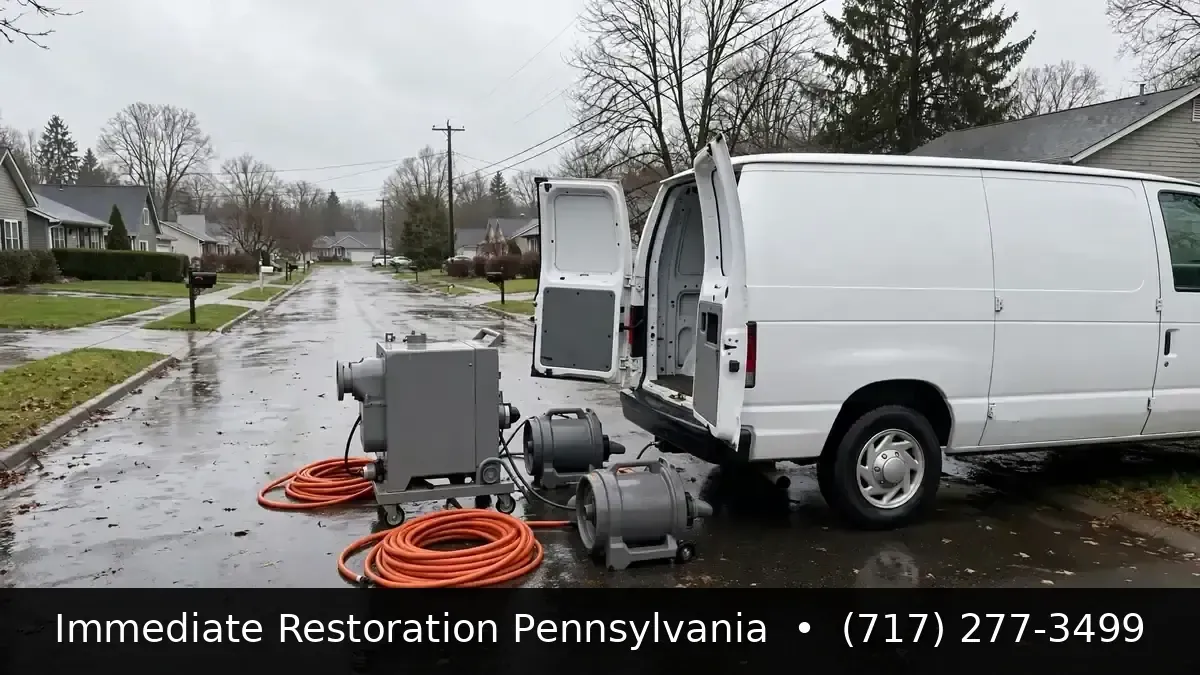
- Extraction — Portable extractors sized for tight rowhouse stairwells and basements pull standing water out fast.
- Drying — Air movers and dehumidifiers dry masonry walls, subfloors, and joists to verified targets — critical because South Philly's old brick holds moisture and can harbor mold inside the wall cavity.
- Sanitizing and mold prevention — Antimicrobial treatment on everything the water touched. If the water sat long enough for mold to start, we move to full remediation.
- Restore — Drywall, flooring, and finishes rebuilt. We also advise on backwater valves — a one-way valve on your sewer lateral that can stop the next city-side backup from reaching your basement.
Areas We Cover in South Philadelphia
Passyunk Square · Whitman · Pennsport · Italian Market corridor · East Passyunk Avenue · Broad Street corridor · Girard Estate · Marconi Plaza · Packer Park · stadium district · Lower Moyamensing · Dickinson Narrows
Nearby areas we serve: Philadelphia, PA · Brewerytown, Philadelphia · Bridesburg, Philadelphia · Bustleton, Philadelphia · Callowhill, Philadelphia · Center City, Philadelphia
Related guides: Hurricane Ida’s Philly Flooding: Lessons for Homeowners · Water Damage Insurance Claims in Pennsylvania
Cost of Water Damage Restoration in South Philadelphia
- Single-room clean-water cleanup: roughly $1,200–$2,500
- Finished-basement extraction, drying, and rebuild: roughly $3,500–$8,000
- Sewage backup with sanitizing: roughly $2,500–$8,000
Estimates only — your free on-site inspection sets the exact price. Sewage jobs run higher because of the sanitizing, waste disposal, and protective protocols required. Insurance frequently covers sudden backups and pipe failures, so document the water level with photos before anything is moved.
Call Immediate Restoration Pennsylvania for 24/7 Emergency Service in South Philadelphia
Basement water won't wait, and neither should you. Immediate Restoration Pennsylvania at (717) 277-3499 — live dispatch around the clock, free estimates, and the documentation your insurance claim needs.
Call (717) 277-3499 NowFrequently Asked Questions
Why does my South Philly basement keep flooding even when it barely rains
Your neighborhood sits in the combined sewer zone. Moderate rain upstream can still surcharge the mains, and a single overwhelmed pipe can back up an entire block of rowhouses. Aging clay laterals, root intrusion, and high water tables make it worse. A backwater valve on your lateral is the most effective single fix.
Is basement floodwater in South Philadelphia safe to touch
Assume no. Combined-sewer backups mix stormwater with sewage — bacteria, viruses, and parasites. Wear boots and gloves at minimum, keep children and pets out, and let professionals extract and sanitize.
The water is gone but my basement smells musty. What should I do
That smell is likely microbial growth starting inside walls or under flooring. Don't seal it in with paint or new carpet. Call us for a moisture inspection — we map trapped moisture with infrared and meters, then dry or remove what's harboring growth.
Will a backwater valve really prevent the next backup
A properly installed backwater (check) valve on your sewer lateral closes when flow reverses toward your home, blocking city-side surges. It needs periodic maintenance to stay reliable. We can assess whether your line is a candidate and coordinate with a licensed plumber.