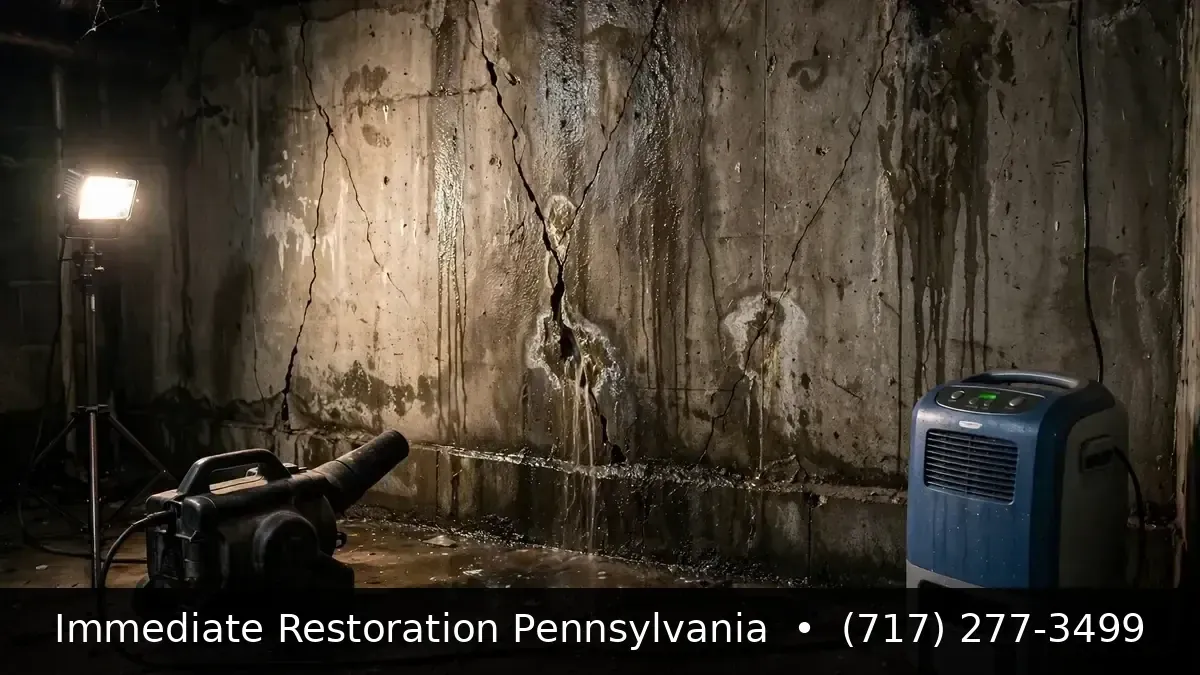
# Water Damage Restoration in Highland Park, Pittsburgh
Highland Park is the only Pittsburgh neighborhood that drinks from — and lives downstream of — two 125-million-gallon reservoirs inside its own park. The Highland Park Reservoir has held the city's drinking water, uncovered, since 1879 — still PWSA's only uncovered reservoir. Its covered twin, built 1897–1903, was reclassified by PA DEP in 2019 as a C-1 high-hazard dam, and PWSA's Hillside Safety Project is now reinforcing the embankment at One Wild Place, Bunker Hill, and Mellon Terrace. At the neighborhood's doorstep, Washington Boulevard plunges into the Negley Run valley, where on August 19, 2011, two inches of rain in one hour sent a nine-foot wall of water and sewage down the corridor and killed four people. Immediate Restoration Pennsylvania provides 24/7 water damage restoration in Highland Park: emergency extraction, structural drying, sewage cleanup, and mold remediation for the Victorians and early-1900s homes ringing the park.
Water Damage Services in Highland Park
Downstream of Two 125-Million-Gallon Reservoirs
The park is Pittsburgh water history: Edward Bigelow bought the land parcel by parcel from farmers (over $900,000), the park opened in 1893, and the Zoo followed on June 14, 1898. Moretti's bronze entrance sculptures (1896, 1900) still guard the gates. But the working infrastructure never left: PWSA's 2022 nine-month liner-and-cover rehab of Highland II was described as the largest project of its kind in North America that year, and the Rising Main 3 pipe feeding the system was the first completed project of PWSA's Water Reliability Plan.
For homeowners, the reservoirs mean two things: the hillsides below them matter — the 2019 C-1 classification and the Hillside Safety Project's slope reinforcement exist because a failure would threaten life and property downstream — and the century-old distribution mains feeding the system, which send water downhill toward foundations when they let go.
The Valley That Flash-Floods
Washington Boulevard's dip into the Negley Run valley has killed people for generations. The 2011 disaster — Kimberly Griffith, 45, and her daughters Brenna, 12, and Mikaela, 8, drowned in their minivan; Mary Saflin, 72, swept into a sewer conduit — followed a June 9, 1951 flood that killed one and injured 12, and a lawsuit complaint later counted at least 30 flash floods stranding vehicles there. PennDOT's $450,000 automatic gates malfunctioned in September 2016, when a van floated in 3–4 feet of water and a 54-year-old woman was rescued. PWSA's counterattack is green: a 1,100-foot bioswale along Negley Run Boulevard intercepts an estimated 450,000–500,000 gallons a year from the combined-sewer shed — the legacy of 2014's Project 15206.
What We Do in Highland Park
- Reservoir-adjacent assessment — Homes below the embankments get a grade-and-drainage survey with the interior work.
- Emergency extraction — Basements and lower levels pumped and cleared, fast.
- Verified drying for old masonry — Victorian brick and plaster dried to metered targets, not by the calendar.
- Sewage-contamination cleanup — Negley Run valley flooding is combined-sewer water: hazardous-grade extraction, disinfection, documentation.
- Mold remediation and rebuild — Antimicrobial treatment, full remediation when needed, plus defense advice: interior drainage, battery-backed sump pumps, sealed entries.
Areas We Cover Around Highland Park
Stanton Heights · Morningside · East Liberty border · Larimer · Lincoln-Lemington-Belmar · Point Breeze · Garfield edge · Highland Park Bridge corridor
Nearby areas we serve: Pittsburgh, PA · Allentown, Pittsburgh · Beechview, Pittsburgh · Bloomfield, Pittsburgh · Brookline, Pittsburgh · Carrick, Pittsburgh
Related guides: Pittsburgh Floods: The 1936 46-Foot St. Patrick’s Flood · Sump Pump Failure and Basement Flooding in PA
Cost of Water Damage Restoration in Highland Park
- Basement extraction and drying: roughly $2,500–$7,500
- Sewage-contaminated flood cleanup: roughly $2,500–$8,000
- Mold remediation: roughly $2,000–$6,000+
Every estimate is confirmed by a free on-site inspection.
Call Immediate Restoration Pennsylvania for 24/7 Emergency Service in Highland Park
Two reservoirs uphill, a flash-flood valley at the doorstep — when water writes itself into your Highland Park home, Immediate Restoration Pennsylvania at (717) 277-3499 — 24/7 dispatch, free estimates, insurance-ready documentation.
Call (717) 277-3499 NowFrequently Asked Questions
Why does Washington Boulevard close after heavy rain
It dips into the buried Negley Run valley — PWSA's hardest-draining watershed. The corridor has flooded since 1951; gates now close the road when water rises, but closures mean the water is already there.
Does living near the Highland Park reservoirs put my home at risk
Not under normal conditions — they're drinking-water infrastructure. But the 2019 high-hazard classification and the Hillside Safety Project exist because a failure would threaten homes below the embankments, and the everyday risk is the aging distribution mains feeding the system.
What's the Highland Reservoir Hillside Safety Project
PWSA's dam-safety program reinforcing the covered reservoir's embankment at One Wild Place, Bunker Hill, and Mellon Terrace — slope engineering plus native-plant landscaping, per PWSA's March 2026 FAQ. Active construction territory; we plan drying work around it.
How do you dry a century-old Highland Park Victorian without damaging the woodwork
With restraint and meters: strategic baseboard removal instead of gutting, controlled dehumidification that won't shock old plaster, and daily readings until the structure — not the schedule — says dry.