· Last updated · 8 min read
By Immediate Restoration Pennsylvania
"How much will this cost?" is the first question every Pennsylvania homeowner asks when water invades — and the honest answer is: it depends on the water, the materials, and how fast you act. A clean-water leak caught in hours might cost $1,500 to dry out. A sewage-flooded finished basement left for a week can exceed $25,000. Understanding what drives the price helps you act fast, file smart insurance claims, and spot an inflated estimate.
Key Takeaways
- These are ballpark ranges for professional work — not DIY, and not the "guy with a truck" special:
- Reputable Pennsylvania restoration companies price using Xactimate — the same estimating software most insurers use — with line items for every task (extraction per square foot, dehumidifier per day,
- If the water source is covered (burst pipe, appliance failure), your homeowners policy typically pays restoration costs minus your deductible — commonly $1,000–$2,500 in PA.
- Get the process right and the price takes care of itself:
Here are realistic Pennsylvania price ranges for 2026, the factors that move them, and how to keep your bill as low as the damage allows.
Typical cost ranges in Pennsylvania
These are ballpark ranges for professional work — not DIY, and not the "guy with a truck" special:
- Minor clean-water damage (small leak, quick response, minimal demolition): $1,500–$3,500
- Moderate damage (one room, some drywall/flooring removal, 3–5 days of drying): $3,500–$8,000
- Major damage (multiple rooms or full basement, contaminated water, extensive demolition): $8,000–$20,000+
- Whole-home flooding (storm/river flood, first-floor involvement): $20,000–$50,000+
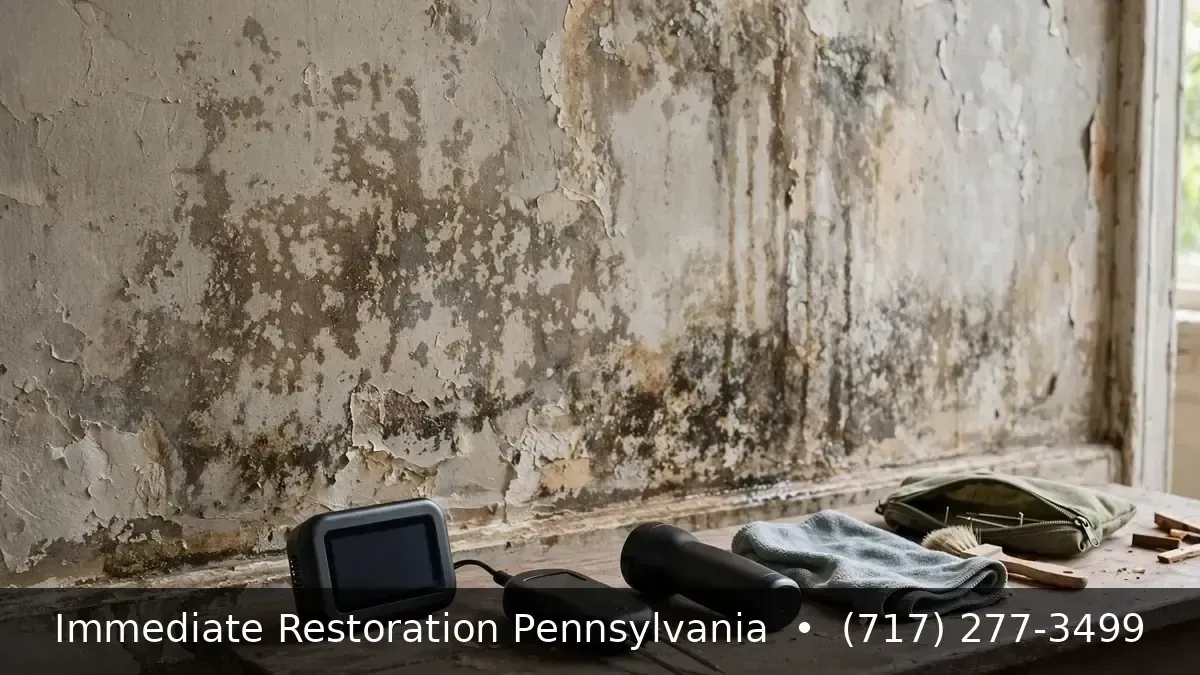
- Mold remediation add-on: $500–$6,000 depending on extent
- Sewage backup cleanup: typically $2,000–$10,000+, driven by contamination protocols and material removal
The single biggest cost lever is time: water extracted and drying started within hours costs a fraction of water left for days, because every day adds demolition, mold risk, and structural damage.
What drives the price up (or down)
- Water category: Clean water (Category 1) is cheapest. Gray water (Category 2) requires more disinfection. Black water — sewage or river flood (Category 3) — requires protective protocols, disposal of porous materials, and antimicrobial treatment, roughly doubling labor.
- Materials affected: Drying hardwood floors in place costs more than replacing carpet; plaster-and-lath in older Philly and Pittsburgh homes is pricier to repair than modern drywall.
- Demolition extent: Flood cuts (removing drywall 2 feet up), insulation removal, and flooring tear-out add labor and rebuild costs.
- Drying duration: Industrial dehumidifiers and air movers typically run 3–5 days; dense materials and cold weather extend the rental.
- Accessibility: Finished basements with built-ins, tight crawl spaces, and multi-story wicking all add labor.
- Contents: Pack-out, cleaning, and storage of furniture and belongings is a separate line item many homeowners forget to budget.
How restoration pricing actually works
Reputable Pennsylvania restoration companies price using Xactimate — the same estimating software most insurers use — with line items for every task (extraction per square foot, dehumidifier per day, drywall removal per linear foot). This is good news: it means legitimate estimates are standardized and comparable. Ask for the line-item estimate, not just a lump sum.
Be wary of anyone who quotes a firm price over the phone without seeing the damage, demands large upfront cash payments, or pressures you to sign before you've talked to your insurer. Under Pennsylvania's Home Improvement Consumer Protection Act, home improvement contracts over $500 must be in writing — and contractors must be registered with the Attorney General's office. Verify before you sign.
Insurance, deductibles, and out-of-pocket reality
If the water source is covered (burst pipe, appliance failure), your homeowners policy typically pays restoration costs minus your deductible — commonly $1,000–$2,500 in PA. Flood and sewer-backup events are covered only with the separate policies or endorsements discussed in our Pennsylvania insurance claims guide.
Two cost-saving truths: first, mitigation costs (emergency extraction, drying) are almost always cheaper than the rebuild costs they prevent — insurers know this, which is why your policy requires you to mitigate. Second, getting a restoration company on-site within hours routinely cuts total claim costs by limiting demolition. Waiting until Monday to deal with Friday night's leak is the most expensive decision in water damage.
Getting a fair estimate
Get the process right and the price takes care of itself:
- Call fast. Emergency response costs a bit more per hour and saves thousands overall.
- Ask for Xactimate line items so you (and your adjuster) can see exactly what's billed.
- Confirm what's included: extraction, demolition, drying equipment, antimicrobials, rebuild, and contents handling — in writing.
- Check credentials: IICRC certification, PA contractor registration, insurance, and local references.
- Never sign over your entire claim via an "assignment of benefits" without understanding it — get advice first.
Our team provides free on-site assessments across Pennsylvania with transparent, line-item Xactimate estimates — the same format your adjuster uses. From emergency extraction through structural drying to complete restoration, you see every dollar before you spend it. Call (717) 277-3499 anytime — the estimate is free, but waiting isn't.
Frequently Asked Questions
How much does water damage restoration cost in Pennsylvania? Minor clean-water incidents run $1,500–$3,500; moderate damage $3,500–$8,000; major multi-room or basement floods $8,000–$20,000+; whole-home flooding $20,000–$50,000+. Contaminated water roughly doubles labor costs.
What is Xactimate and why does it matter? Xactimate is the standardized estimating software used by most insurers and reputable restoration companies. Line-item Xactimate estimates make quotes transparent and directly comparable to your adjuster's numbers.
Will insurance cover the full restoration cost? If the water source is a covered peril (like a burst pipe), insurance typically pays the restoration cost minus your deductible. Flood and sewer backup require separate coverage.
How can I keep water damage costs down? Act within hours, not days — fast extraction and drying prevent the demolition and mold that drive costs up. Then get line-item estimates from IICRC-certified, PA-registered contractors.
For official guidance on preparedness and recovery, see FEMA’s National Flood Insurance Program.
Sources
- https://www.fema.gov/flood-insurance — FEMA’s National Flood Insurance Program
Related Reading
If this guide helped, these next reads go deeper:
- Water Damage Insurance Claims in Pennsylvania
- Drying & Dehumidification Process Explained
- Mold After Flooding: PA Basement Guide
- Water Damage Restoration
- Emergency Flood Cleanup Services
Where we help: Philadelphia, PA · Pittsburgh, PA · Harrisburg, PA · Allentown, PA