· Last updated · 8 min read
By Immediate Restoration Pennsylvania
Pennsylvania storms attack homes from above. Summer thunderstorms rip shingles and drive rain sideways under flashing. Fall nor'easters clog gutters with leaves until water backs up under the eaves. Winter builds ice dams that force meltwater uphill beneath the shingles. And the leak rarely shows up where the water enters — it travels along rafters and decking, then stains a ceiling two rooms away from the breach.
Key Takeaways
- Inspect from inside and out, twice a year (spring and fall) and after every major storm:
- Water coming through the ceiling is an active emergency:
- A roof leak doesn't end when the roofer leaves.
- What causes most roof leaks in Pennsylvania?
Roof leaks are slow-motion water damage: by the time you see the stain, water has often been working for weeks. Here's how Pennsylvania's weather damages roofs, how to spot leaks early, and what to do when the storm wins.
How Pennsylvania weather damages roofs
- Wind: Thunderstorm gusts and nor'easters lift and crease shingles, breaking their seal. Once a shingle's seal is broken, the next rain drives water underneath. Missing shingles after any major storm deserve immediate attention.
- Hail: Even small hail bruises shingles, knocking off protective granules and shortening roof life. Check gutters for granule buildup after hailstorms.
- Ice dams: Pennsylvania's freeze-thaw winters are ideal for ice dams — heat escaping into the attic melts roof snow, which refreezes at the cold eaves, building a dam that forces water back under the shingles. Poor attic insulation and ventilation are the root cause.
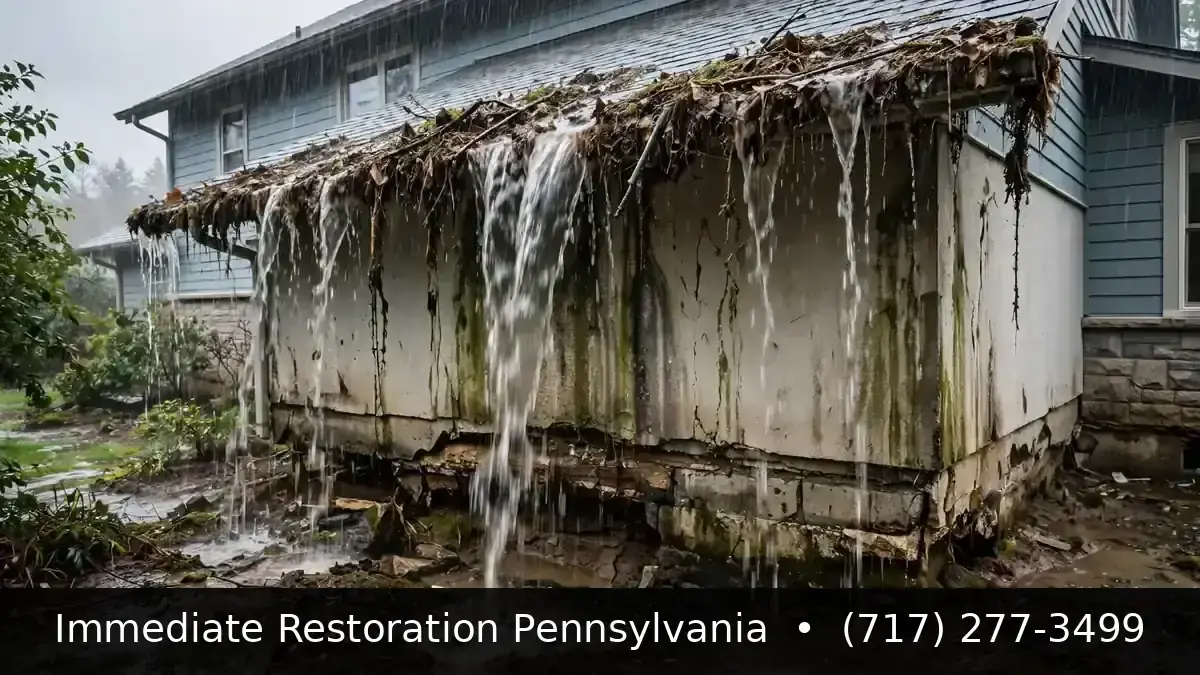
- Clogged gutters: When gutters overflow, water sheets down behind fascia and into soffits, or pools at the foundation. In winter, clogged gutters become ice troughs.
- Flashing failures: The metal around chimneys, vents, skylights, and valleys is the most leak-prone part of any roof — sealant dries out, flashing lifts, and water follows.
- Fallen limbs: The tornadoes and microbursts that accompany PA severe weather puncture roofs outright.
Spotting a roof leak before it spreads
Inspect from inside and out, twice a year (spring and fall) and after every major storm:
- Attic first: Look for daylight through the decking, water stains on rafters or sheathing, damp insulation, and musty odors. The attic shows leaks months before ceilings do.
- Ceilings and walls: Yellow-brown stains, bubbling paint, and peeling wallpaper — especially on top floors and around chimneys.
- Ground-level roof scan: With binoculars, look for missing, curled, or cracked shingles; damaged flashing; and granule piles in gutters or at downspout outlets.
- After ice season: Check for lifted shingles at eaves and water stains on exterior walls under the roofline.
A stain the size of a quarter can hide a saturated 4-foot section of decking. Small signs deserve fast action.
Emergency response when the roof leaks
Water coming through the ceiling is an active emergency:
- Contain it. Buckets, towels, and plastic sheeting under the drip. Move furniture and electronics. If a ceiling is bulging with trapped water, poke a small relief hole with a screwdriver (into a bucket) — a controlled release beats a ceiling collapse.
- Tarp the roof — safely. If you can do so without risk, cover the damaged area with a secured tarp as a temporary stopgap. Never go on a wet or storm-damaged roof; falls kill. Call a roofer for emergency tarping if conditions are unsafe.
- Document for insurance. Photograph the interior damage, the roof damage, and the storm conditions. Most PA policies cover storm-created openings (wind, hail, fallen trees) but not wear-and-tear leaks.
- Start drying. Wet insulation, drywall, and framing need professional drying before mold sets in — roof leaks that soak attics are a top cause of hidden mold.
Preventing the next leak
- Clean gutters twice a year (late fall after leaves drop, and spring) — and check that downspouts discharge well away from the foundation.
- Fix attic insulation and ventilation to prevent ice dams: the attic should stay near outdoor temperature in winter.
- Trim overhanging limbs before storm season.
- Reseal flashing around chimneys and vents every few years, and replace missing or damaged shingles promptly.
- Know your roof's age: architectural shingles last 20–30 years in PA; if yours is past 20, inspections matter more than ever.
When a leak becomes water damage
A roof leak doesn't end when the roofer leaves. Soaked insulation loses its R-value, wet drywall grows mold, and trapped attic moisture can rot decking. Professional water damage response dries the structure with targeted equipment, removes unsalvageable materials, treats for mold, and restores ceilings and walls — coordinated with your roofer's repair and your insurance claim.
Our storm and flood damage restoration teams respond 24/7 to Pennsylvania storm damage — emergency mitigation, structural drying, and full restoration, plus ceiling and wall repair for what the leak left behind. Call (717) 277-3499 while the stain is still small.
Frequently Asked Questions
What causes most roof leaks in Pennsylvania? Wind-damaged shingles, failed flashing around chimneys and vents, ice dams in winter, clogged gutters, and storm debris. Most leaks start small and worsen over weeks before showing inside.
How do I know if I have an ice dam problem? Large icicles at the eaves, ice buildup in gutters, and water stains on exterior walls or ceilings near outside walls after snowfalls. The root cause is usually poor attic insulation and ventilation.
Will insurance cover my roof leak? If the leak was caused by a covered peril — wind, hail, fallen tree — typically yes. Gradual wear-and-tear leaks and neglected maintenance are excluded. Document storm damage promptly.
What should I do if my ceiling is bulging with water? Place a bucket underneath and poke a small relief hole to drain it in a controlled way — this prevents a sudden ceiling collapse. Then call a roofer and a water damage company.
For official guidance on preparedness and recovery, see Ready.gov and FEMA.
Sources
- https://www.ready.gov/ — Ready.gov
- https://www.fema.gov/ — FEMA
Related Reading
If this guide helped, these next reads go deeper:
- Hurricane Ida’s Philly Flooding: Lessons for Homeowners
- Frozen Pipes in Pennsylvania: Winter Prevention Tips
- Drying & Dehumidification Process Explained
- Storm & Flood Damage Restoration
- Ceiling & Wall Water Damage
Where we help: Philadelphia, PA · Pittsburgh, PA · Allentown, PA